Have this up as they walk in. Say nothing for the first two minutes — let the room fill.
Before you start: autopsy sign-up sheet circulating, sticky notes and markers on tables, wall space cleared for the Priors cluster, backup screenshots of both demo passes open in a second window.
Press t to start the session clock. The chip under the slide number shows how far ahead or behind you are.
I run a design studio. Everything in this course is something I do on paid work, or something I got wrong on paid work first.
When I show you a system in week two, it will be a real one, with a real history, that a real client is paying for. Not a teaching example.
Keep this to two minutes. Credibility, not biography. The thing they need to believe is that you use this stuff, not that you have opinions about it.
The persistent domain is the single most important structural decision in the course. Say it plainly here so week three is not a surprise.
Mixed room. Some of you have made twenty journey maps; some have made none. That is fine and it is planned for. When we hit a method, whoever knows it teaches their table for five minutes, then everyone does the new part together. Primers are in the notebook template if you want them.
Say it, then move on. Do not explain it. They have no reason to believe it yet and arguing for it now spends credibility you will want at 10:45.
You should be able to predict this by week three. The studio block is the biggest one on purpose, and from week seven it belongs entirely to your own project.
The session opens with a Workflow Autopsy. One or two of you show how you actually worked that week: what helped, what wasted an hour. Rotating, signed up in advance. The first voice in this room each week is not mine.
Point at the sign-up sheet as you say the autopsy line. Get week two's volunteers before the break — it is much harder after.
| Research + Discovery | 20% | Research Pack (W05) · notebook research.md |
|---|---|---|
| Process + Practice | 20% | Probe (W09) · notebook decisions.md and patterns.md |
| Presentation + Production | 30% | Proposal (W06) · Final intervention and presentation (W14) |
| Criticality + Agency | 10% | Position paper, 1,200 words (W13) |
| Class Participation | 20% | Crit log · peer-directed weekly write |
These five weights are fixed by the institution. Do not invite negotiation on them.
Flag now: the notebook is split across two criteria and totals 20%. brief.md and patterns.md are required but unscored — say that out loud or they pad them.
My record, four bands, filled in at the end of every session. The criterion is the institution's own wording: being useful to other people's work. You get a written mark and a paragraph twice — after W06 and after W11.
150 words, pass/fail, best ten. It must respond to a named classmate's work from that session. Not a diary. If it could have been written without attending, it fails.
Both are published today. If you ever want to know where you stand, ask and I will tell you the number.
Twenty percent with no rubric and no record collapses to "everyone who showed up gets 18" the first time someone appeals. The two issued signals in November are what make that conversation routine instead of a fight.
decisions.md. That conversation is the evidence, and you may bring someone with you.This slide has to come before the week-three domain claim, not after. If students do not know the exposure is optional, they pick a safe domain to dodge it, and the whole term gets blander. That sequencing costs nothing, so do not lose it.
Forty minutes, hard stop at 9:30. If you are past the graveyard's fourth case at 9:11, cut Segway and NFTs to one line each. The Picturephone is the one that must survive — it is the cleanest case in the set.
Nothing on the list of technologies in your outline was invented in the last three years. Every one of them is the current costume of a pursuit that is centuries old, and the pursuit tells you more about what it is for than the costume does.
When something is described to you as unprecedented, the first useful question is: what is the precedent? There is almost always one, and it usually already failed once.
Mechanical reasoning, automata, the Mechanical Turk, cybernetics, expert systems, connectionism, the two AI winters. The current moment is a chapter, not a beginning.
Every cycle mistakes fluency for understanding, then discovers the gap. The interesting question is never whether it is intelligent. It is what people did with it while they believed it was.
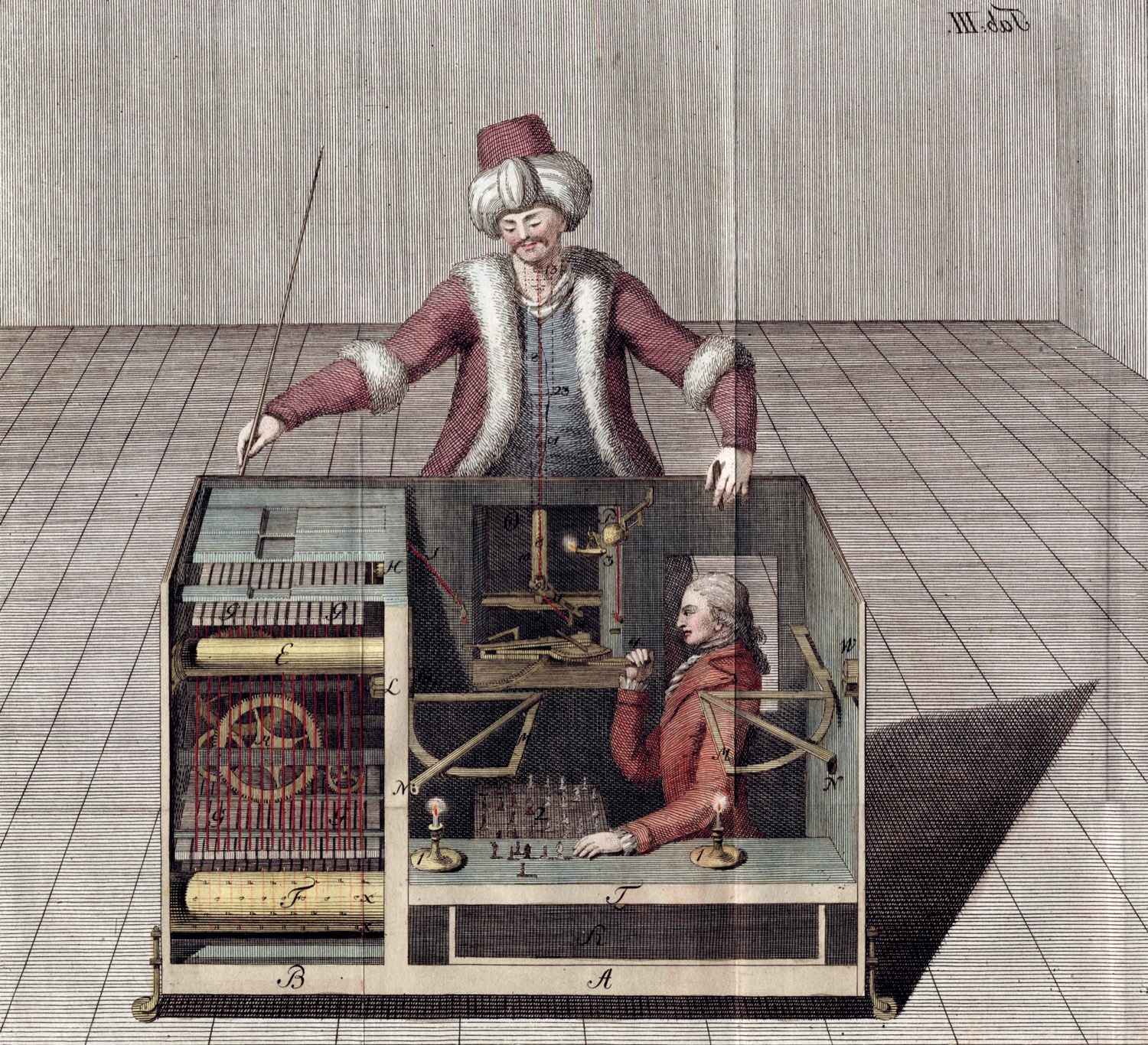
Joseph Racknitz, Ueber den Schachspieler des Herrn von Kempelen, Leipzig 1789 · public domain
Pick two or three concrete waypoints you can actually talk about rather than listing everything. The Mechanical Turk is worth a minute on its own: a fake automaton with a person hidden inside is a startlingly good description of several products currently shipping.
On the plate: this is Racknitz's cut-away, not a photograph — he was reconstructing how he thought the trick worked, and he got the mechanism wrong. One sentence is worth it: the earliest published explanation of the fraud is itself a guess. Point at the operator in the cabinet, then leave him there — slide 27 is the same diagram, 234 years later.
Panoramas, stereoscopes, Sensorama, the Sword of Damocles, VRML, Second Life, Oculus, spatial computing. Roughly a thirty-year cycle of the same promise.
The technology gets better every cycle and the adoption problem never changes, because the adoption problem was never resolution or latency. It is that you have to put something on your head.
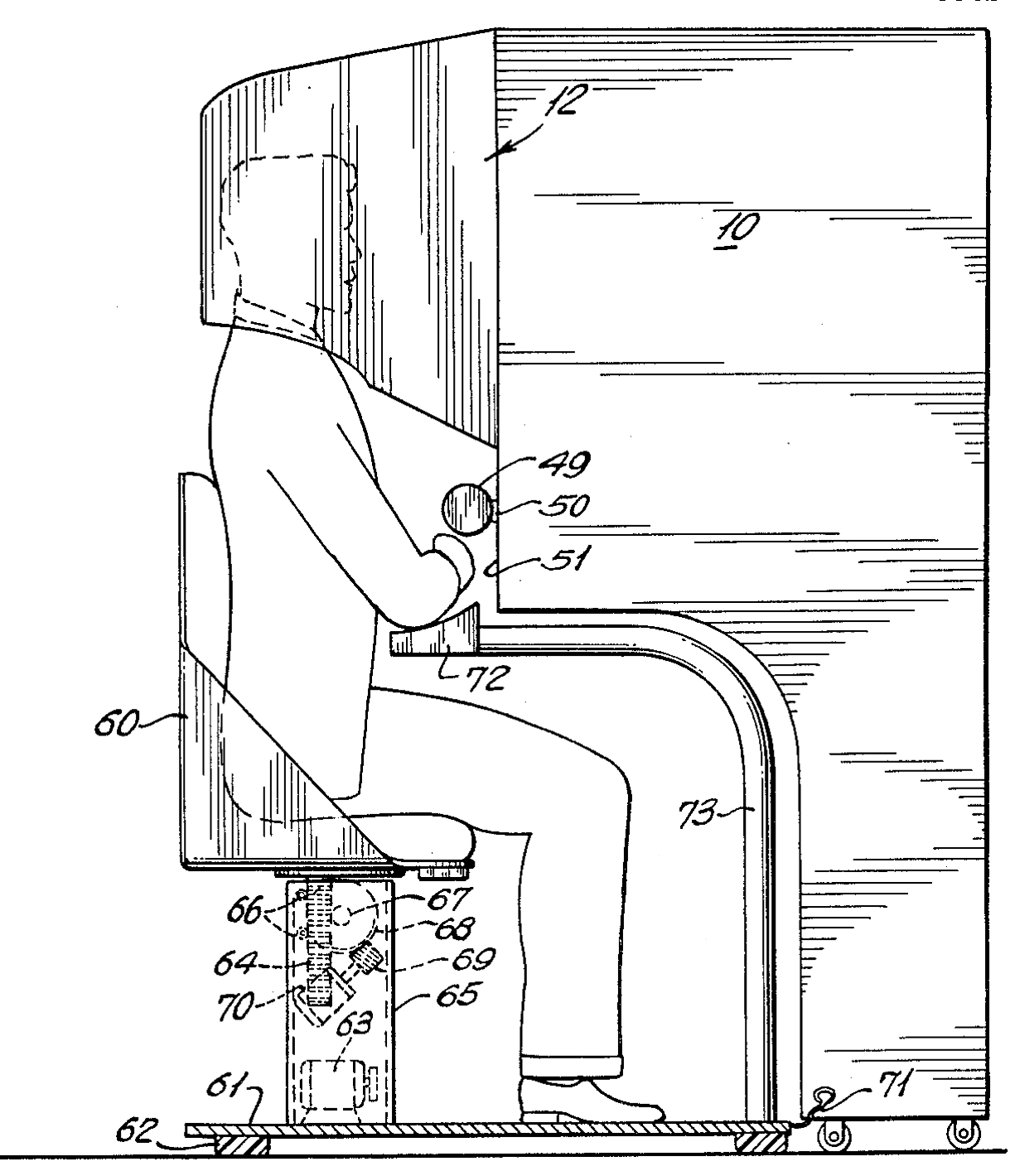
Morton Heilig, US Patent 3,050,870 (1962), fig. 5 · public domain
The patent figure does the argument for you. Sixty-four years old, and the thing the drawing is built around is a hood you put your head into. Nothing about resolution or latency is visible in it, because neither was ever the problem.
Sutherland's Sword of Damocles is the funnier image — a ceiling-mounted rig holding the display above the wearer's head — but it is © Harvard and not free. If you want it, it needs a clearance request; this patent drawing is rights-clean and makes the same point.
Six technologies that were the future. What was promised, what shipped, what actually killed them.

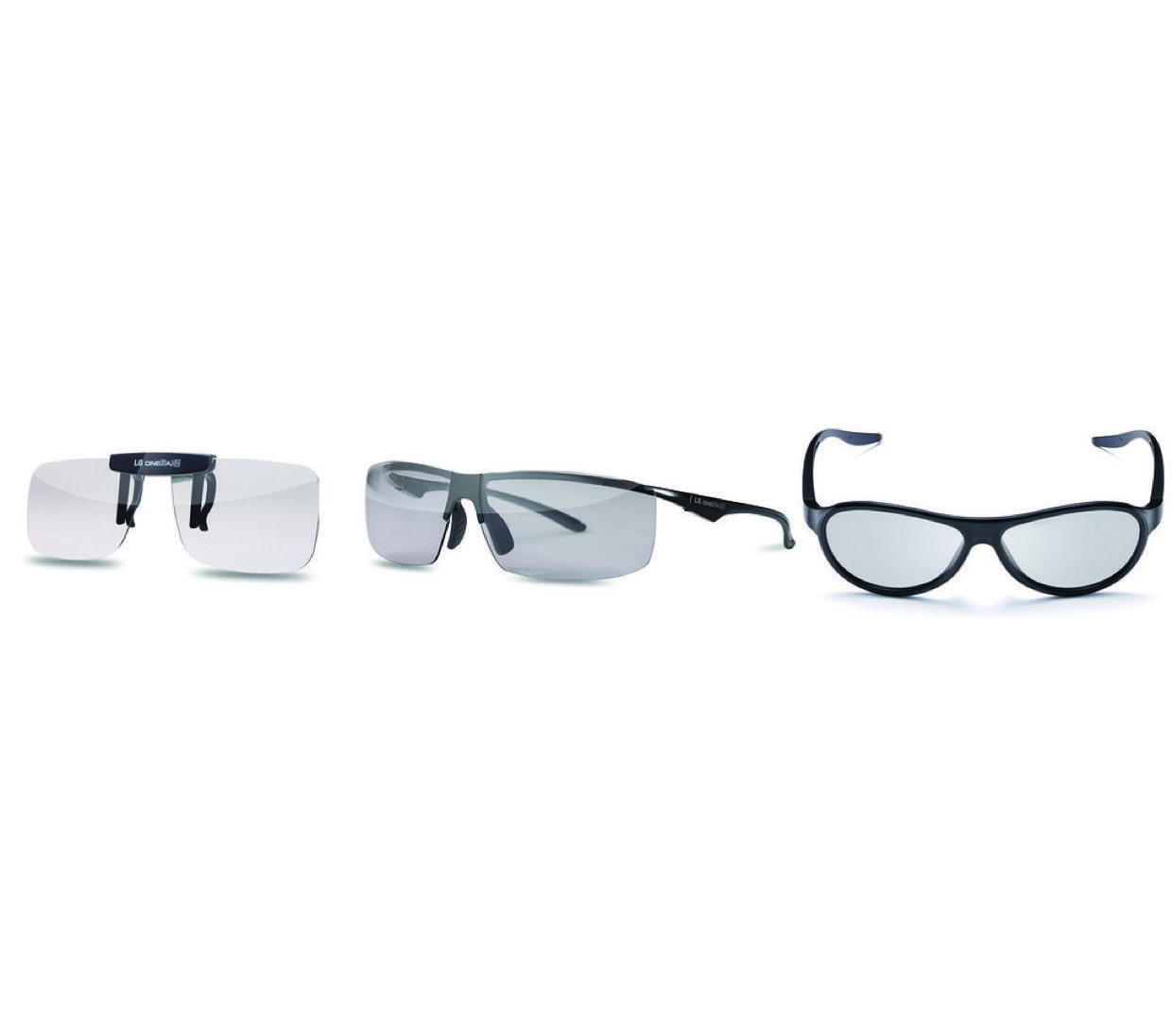
LG Electronics · CC BY 2.0
On the plate: the accessory is the case. Every one of these had to be bought, charged or handed out, worn over prescription glasses, and kept track of for each person on the sofa. Ask how many they would need to own for a family film night. That question is the whole slide.
Exit dates vary by brand and by whether you count "announced" or "last shipped" — Vizio 2014, Samsung 2016, Sony and LG January 2017. Say "by 2017 nobody was shipping one" rather than defending a single date.
Note what survived: the version nobody had to wear in a bar. Same device, different room, eight more years.
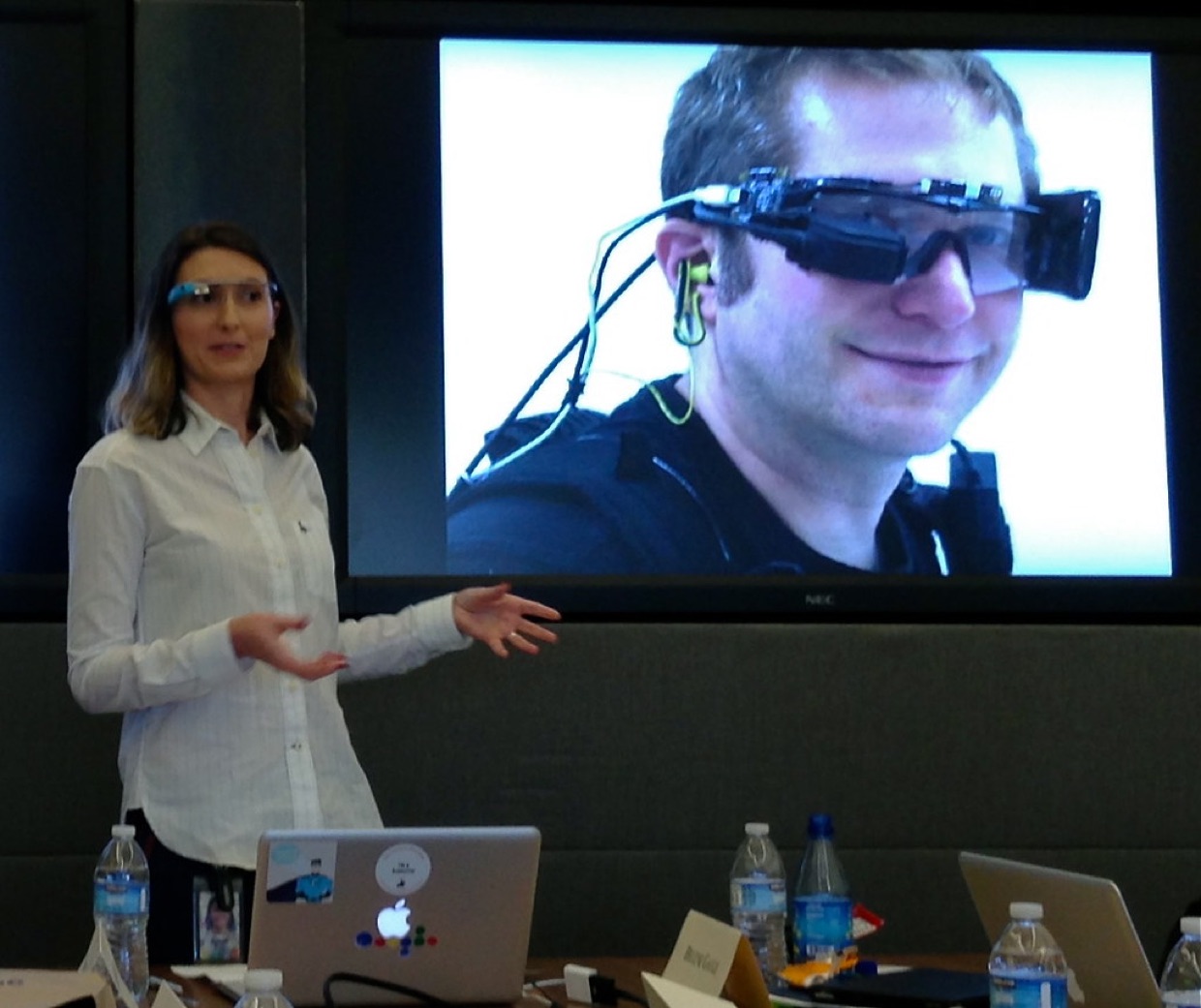
Steve Jurvetson, Google HQ, Jan 2013 · CC BY 2.0
On the plate: two generations in one frame. She is wearing the shipping product; the rig on the screen behind her is where it came from. The gap between those two objects is fifteen years of making it socially wearable — and it still was not enough.
This is the clearest teaching case in the set after the Picturephone. The failure is legible to everyone in the room without any technical knowledge, and the enterprise survival is the twist that makes the point precise: it was not the object, it was where you had to wear it.
But the form factor won. The same balance-and-battery stack came back as the shared e-scooter, and the company that killed the Segway now sells those at scale. The technology was never the problem.
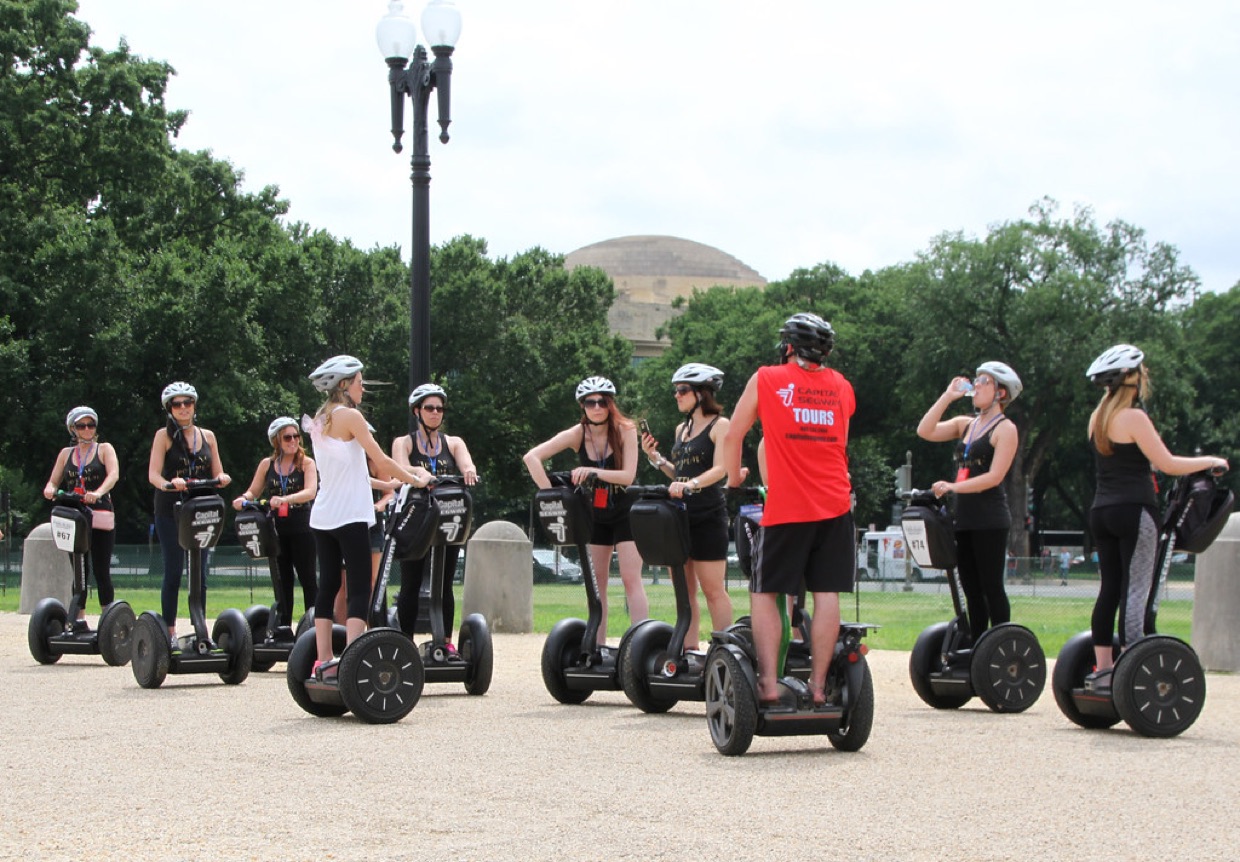
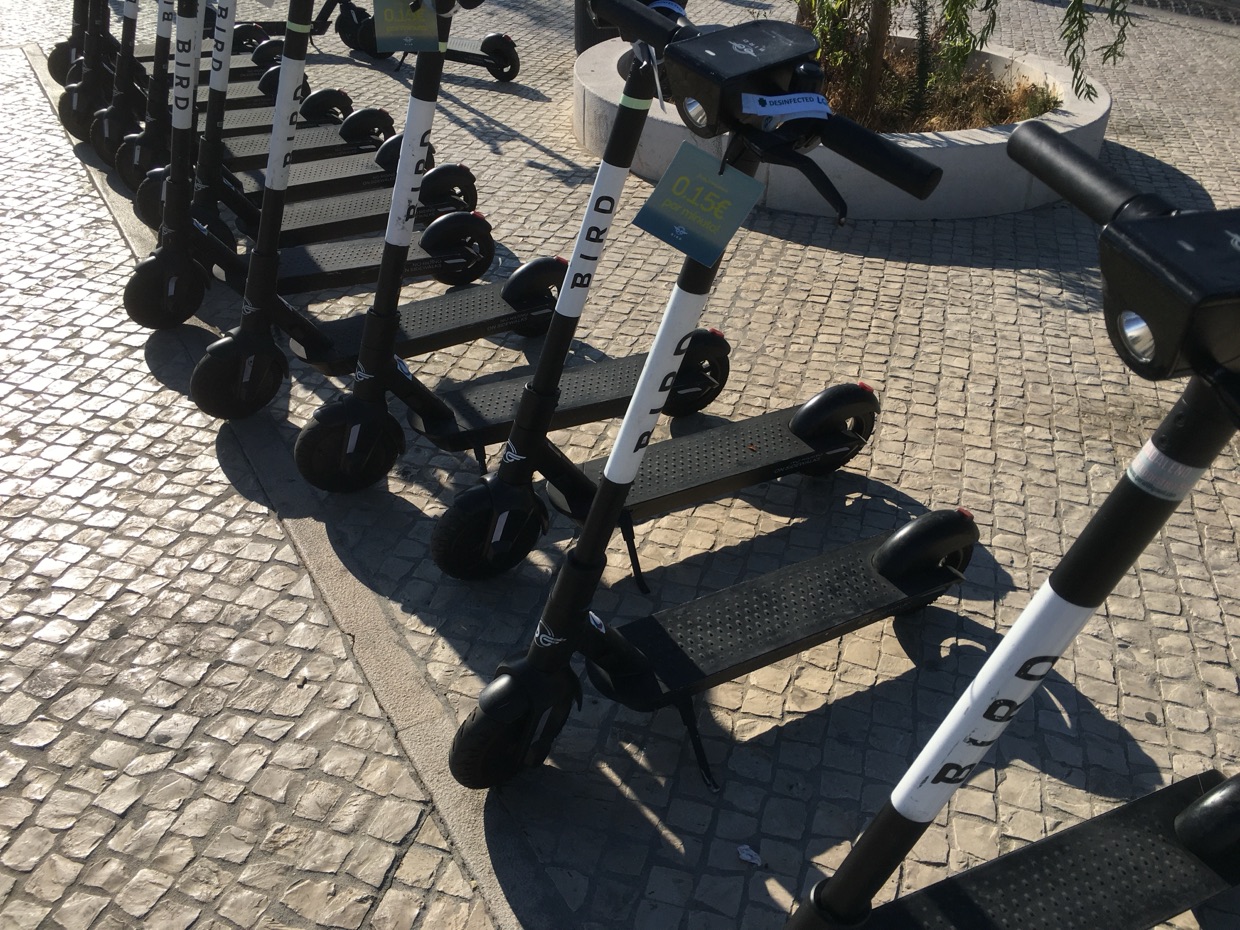
Top: Tony Hisgett, Washington DC, 2016 · CC BY 2.0. Bottom: CAPTAIN RAJU, Lisbon, 2020 · CC BY-SA 4.0
On the plate: put the two frames side by side before you say anything. Top: helmets, a guide, single file, a fee, a booking. Bottom: the same balance-and-battery promise, parked on a pavement, unlocked with a phone, nobody supervising and nobody looking ridiculous. Same technology, and the entire delta is social packaging.
The scooter coda is the whole reason to include Segway. Without it this is just a joke about a funny vehicle; with it, it is a case about a correct technology in the wrong social package, ten years early.

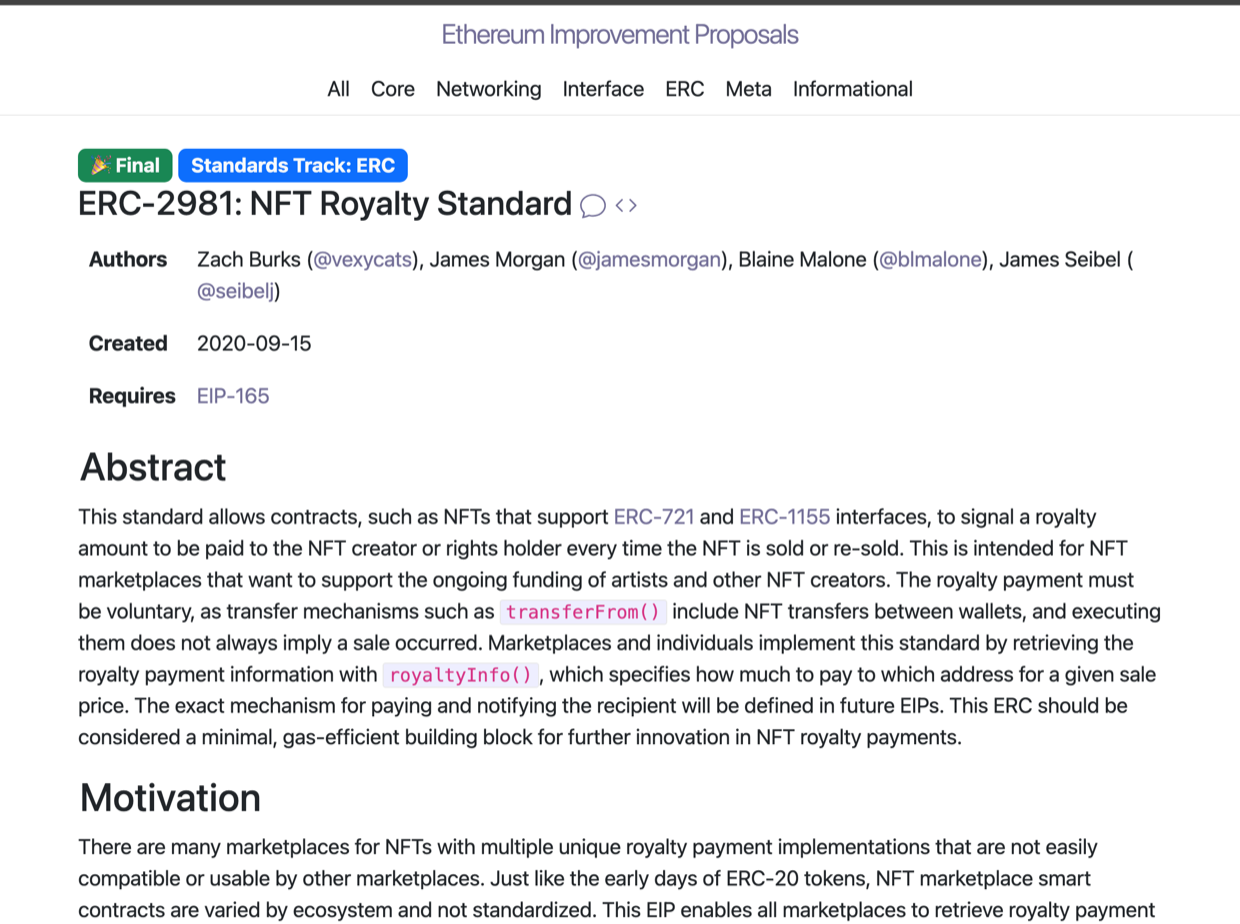
ERC-2981, NFT Royalty Standard · CC0
Read the sentence off the plate, out loud, verbatim: “The royalty payment must be voluntary, as transfer mechanisms such as transferFrom() include NFT transfers between wallets, and executing them does not always imply a sale occurred.” That is the standard itself, marked Final, saying the feature was never guaranteed. Not a critic, not a journalist, not me. The primary source is the argument — and it was published in 2020, two years before the money arrived.
Do not put a Bored Ape on this slide. Yuga Labs' own 2023 filings assert common-law copyright while conceding no registration for the images; it is contested, unlicensed, and the cliché. This screenshot is CC0 and a better slide.
Keep the emphasis on royalties, not on prices. The price collapse is the boring part and they already know it. The royalty story is a design lesson: the feature that justified the whole thing was never actually built into the thing. It lived in marketplace policy, so it evaporated under competition. Ask them where else they have seen a promise held up by a norm rather than a mechanism.
Sources disagree on the peak — use annual totals, not headline collapse percentages.
This one died six months ago. It is not history — you watched it happen.
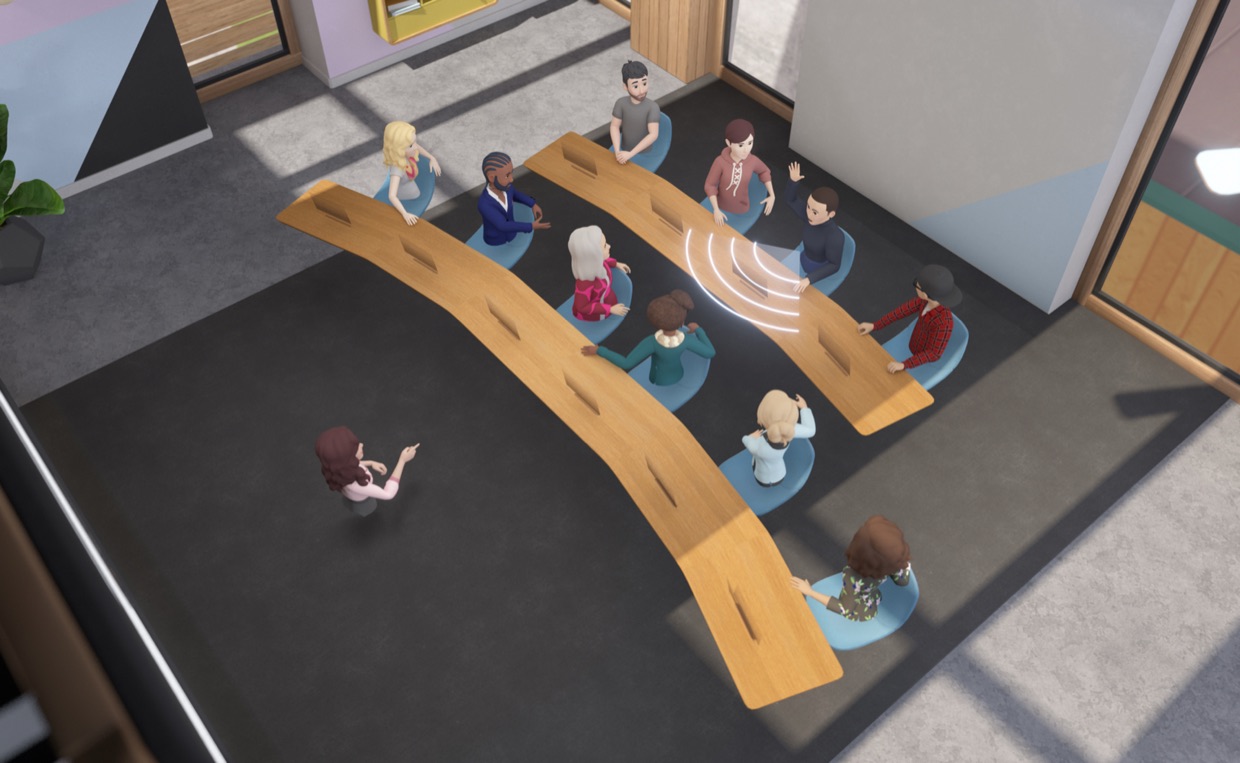
Meta Newsroom, Horizon Workrooms launch, Aug 2021 · press use
On the plate: this is Meta's own launch image, not a critic's screenshot — chosen by the company to look its best. Legless cartoon avatars around a conference table. Let the room react before you say anything; the laugh is the argument.
The detail worth naming: Meta published this in August 2021, shut the product down in February 2026, and the launch post is still live on their newsroom. Pull it up beside the discontinuation notice if you have the network.
Nobody published adoption numbers, so do not quote any. The point stands without them.
The recency is the value here. Every other case is something they inherited as received wisdom; this one they lived through, which makes the pattern feel like a tool rather than a story.
Fifty years later the identical capability succeeded, unchanged in function, once it was free and optional.
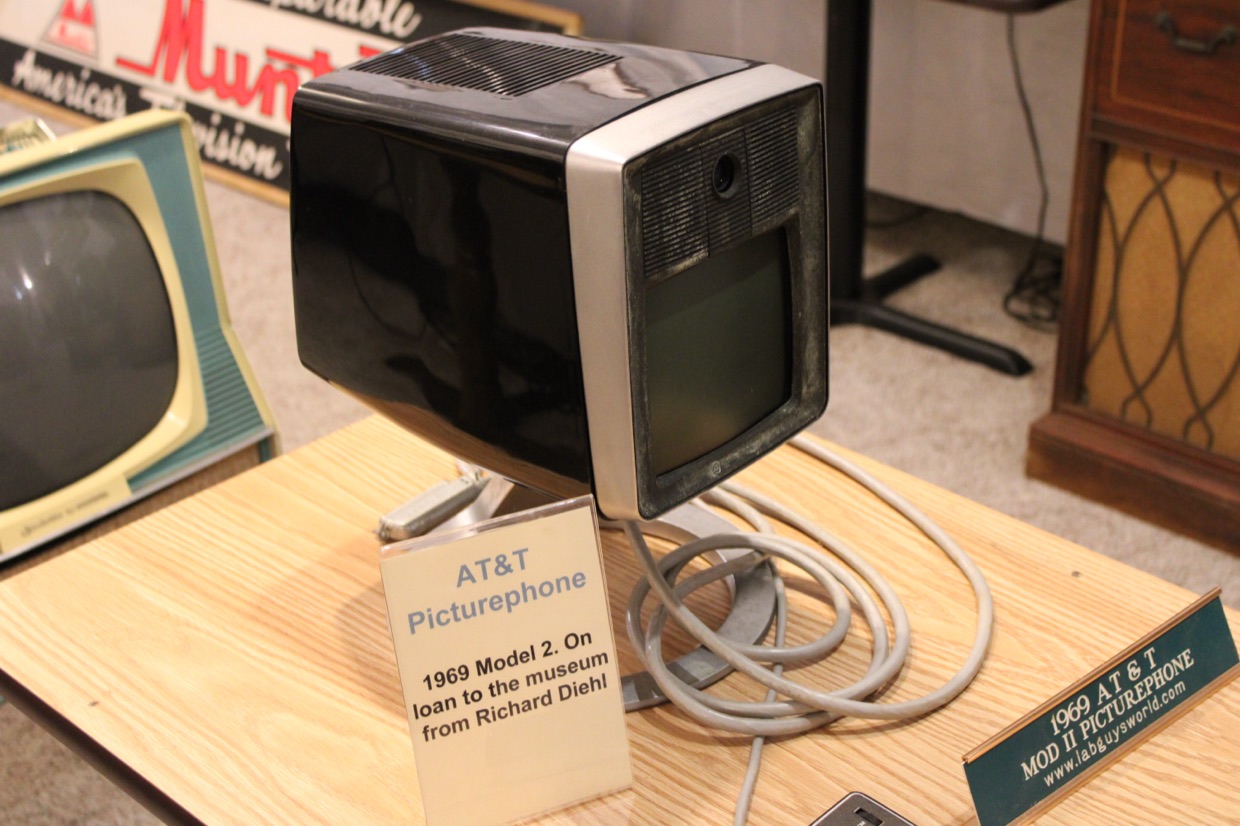
DogsRNice, Early Television Museum, 2022 · CC BY-SA 4.0
On the plate: a museum object with a loan card next to it. That is where a working technology ends up when nobody wants it — not broken, not superseded, just declined. Worth saying: the device on this table did the thing your phone does, in 1970, and it did it well.
The better image is not free. IEEE's history wiki (ethw.org/Picturephone) holds the 1970 AT&T advertisement showing one actually in use, credited "Courtesy AT&T Archives and History Center" — permission-based, and IEEE is a clean party to ask. Worth a request if you teach this again.
This is the case that isolates the variable. Same function, same promise, opposite outcome. The only things that changed were price and social norm — not capability. If they take one case out of the room, it should be this one.
Thirty-two sets. Let that number sit for a beat before you move on.
Let the room push back if it wants to. Someone may argue 3D TV was partly ergonomic, which is fair and worth conceding — the claim is "rarely the technology," not "never."
Most of you were old enough to watch this one happen, which makes it the only case in the set where you can check your own memory against the outcome.
Do not let this become a crypto argument. The point is the shape of the cycle, not a verdict on the technology. If someone wants to relitigate it, park it for the position paper.
You have seen the curve with the peak and the trough. It is worth knowing that it is a commercial product sold by a research firm, not an observed law. Nothing measured produces that shape, and technologies do not reliably travel along it.
It is not useless. It is a rhetorical device for talking about expectation. It is just not evidence, and it gets cited as if it were.
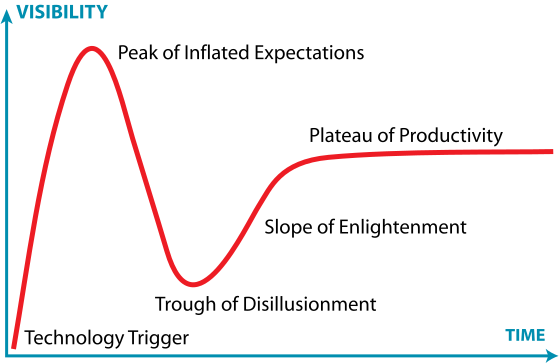
Jeremy Kemp, volunteer redraw · CC BY-SA 3.0
Worth being precise and fair here rather than dismissive — the curve is a genuinely useful communication tool. The failure is in how it gets used: as a prediction with a position on it, when it has no predictive content.
Say where this particular drawing came from — it is the best beat on the slide. “Hype Cycle” is a Gartner trademark and Gartner's own curves are proprietary, sold. The only reason a free version exists at all is that volunteers redrew it as though it were a natural law. So what is on screen is a fan reconstruction of a consulting deliverable that has been mistaken for physics. The image is an example of the thing the slide is criticising.
Adoption is slow, then fast, then saturated. Useful because it asks a real question: where on the curve is this, and what evidence tells you? Most things called emerging are still flat, and flat can last thirty years.
We overestimate the effect of a technology in the short run and underestimate it in the long run. Almost everything in the graveyard is the first half. Some of it will come back as the second.
The scooter is Amara's Law with wheels. So, probably, is the headset.
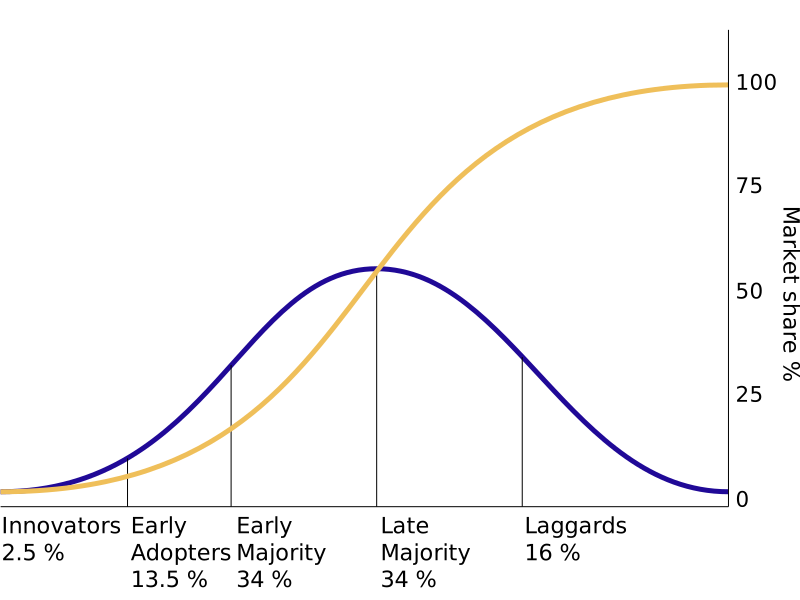
After Rogers, Diffusion of Innovations, 1962 · public domain
The plate is the S-curve only. Amara has no diagram and should not get one — he never published a chart, the “law” is a single sentence, and every diagram in circulation is an uncredited blog redraw. Importing one would hand a random illustration the authority of a citation, which is exactly the failure this lecture is about. If you want one, draw it yourself: two lines, expectation against actual impact, five minutes in vector.
Use the plate to ask the real question rather than to explain the curve: where on this is the thing you are excited about, and what evidence puts it there? Most things called emerging are still flat, and flat can last thirty years.
Someone made it work once, under conditions they chose, in a cut they edited. Tells you the ceiling. Tells you nothing about the floor.
You can buy it, and it works when you are tired and holding something else. This is the only one of the three that is evidence.
An intention, written by someone whose job is funding or share price. Frequently describes a thing that does not exist yet, in the present tense.
A rendering is none of the three. Always read the limitations section. We come back to this properly in week two.
Ninety seconds. No conferring. Which is a demo, which is a product, which is a press release — and what in the artifact itself tells you?
Then we will find out how many of you got it, and more usefully, what the ones who got it were looking at.
Keep this to two minutes total. It is a taster for the Signal Hunt in W02, not a workshop. Pick artifacts where the giveaway is a visual tell — impossible lighting, a cut that hides a hand, a verb tense.
Prep — one of three is in the repo, two are not:
(b) PRODUCT is captured — public/media/w01-28-aws-just-walk-out.png, the live AWS Just Walk Out page. Verified August 2026: it says “advanced AI, computer vision, and RFID” and mentions human review nowhere. Run it against the April 2024 Axios reporting on roughly a thousand workers in India labelling video, and Amazon's rebuttal that they review footage after the fact to train models. The ambiguity is the point — Amazon's answer is partly reasonable, which makes it a far better discussion object than a clean villain. It is also the Mechanical Turk from slide 13, 234 years later, so the lineage and the graveyard close a loop.
(a) DEMO still to grab — Magic Leap, “Just another day in the office.” ⚠️ Only findable as a YouTube reupload, not the official channel. The Register's contemporaneous report confirms it was made with Weta Workshop and was not shot through the device.
(c) PRESS RELEASE still to grab — Tesla, Oct 2016, “All Tesla Cars Being Produced Now Have Full Self-Driving Hardware.” Present tense, unambiguous. ⚠️ The live URL is dead — it redirects to the blog index. The post was quietly removed in 2024 while the hardware still had not delivered. The deletion is the lesson; you need a Wayback capture, so screenshot one yourself.
Write, don't discuss. Ten minutes. Then we put them on the wall and cluster them together.
Silence for the writing is important. If they talk first, the room converges on three opinions and you lose the spread — and the spread is the entire value of the artifact in W14.
We are not resolving anything today. This is a record of what this room believed on the eighth of September.
We put it back on the wall in week fourteen and you get to see which of your worries turned out to be the right one, and which of the things you were excited about you stopped mentioning by October.
Actually take the photograph. Put it somewhere you will find it in December — this is the kind of thing that is trivially easy to lose and impossible to recreate.
This is the session. Everything before it was setup.
If you would rather just watch, watch. Nothing here is graded and nothing here is attendance-checked.
Pace against the room, not against the clock. The moment where they see their own second output land differently is worth more than finishing the slides.
If the tool, the account or the device doesn't work for you or you'd rather not use one today, take the printed pack and pair with a neighbour. You read both outputs and write the comparison. That is the assessable half anyway.
Prep, non-negotiable: both passes captured as screenshots the night before, and the printed pack run off. The network in B3110 is not something to stake the session's one load-bearing moment on.
Do not name anyone or ask who has an account. The alternative is stated once, neutrally, and taken silently.
Design an onboarding flow for a health app.
That is the whole prompt. No context, no brief, no research, nothing about who it is for. Type it exactly as written and read what comes back.
Read yours aloud. All of it, even though it is boring — the boredom is the evidence. Do not editorialise while reading.
Ask before you show this slide: "what's wrong with it?" Someone will say generic. Push once — generic how? Get them to the difference between wrong and unspecific, because that distinction is the whole course.
Before we ask again, we are going to give it what a colleague would have needed to answer the same question well. Not more instructions. More situation.
Paste this in first, then ask the identical question.
A real brief who it is for, what it has to do, who is paying Three quotes verbatim, from actual people, not paraphrased Two hard constraints what is fixed and cannot move One stated non-goal what we are deliberately not doing One example of bad something we do not want to look like
Nothing here is a prompting trick. It is the same material you would put in front of a collaborator on their first day.
This is a deliberate trailer for W02, where they build this properly and it becomes two of their four notebook files. Say that: "next week you build one of these for your own project and keep it all term."
Use real material from a real project. Invented context produces a visibly weaker second pass and the whole demo lands softer.
Design an onboarding flow for a health app.
Identical words. The only thing that changed is what was in the room when you asked.
Make the identical-words point explicitly. If they think the second prompt was cleverer, they will conclude the lesson is about phrasing, and the lesson is not about phrasing.
Wait. Count to ten in your head if you have to. The silence is uncomfortable and it is the most valuable thing on this slide.
Push past the first answer. "Better" is not an answer. Better how — more specific, more opinionated, willing to leave things out? Get them to notice that the second output refuses things, and that refusing is what a designer does.
If someone says "not much changed," take it seriously and publicly. Thin context, thin gain — that is the thesis stated backwards and it is a finding, not a failure. You will need this exact move again in W04.
It is a fact about design. A designer who skips the research makes the first output too — fluent, defensible, generic, and about nobody.
The model just makes it happen in four seconds instead of four weeks, which is the first time most people have been able to see it clearly.
This is the sentence that stops the course being an AI course. Land it and then stop talking — do not add a third example.
What you found and where it came from. Every AI-surfaced claim traced to a primary source or explicitly marked unverified. Graded, 10%.
What you chose, what you rejected, and why. This is where judgment becomes visible. Graded, 10%.
Your project's situation. Built properly next week. Required, unscored.
Rules you have earned. Every entry cites the decision or probe that produced it. Required, unscored.
Say "required but unscored" out loud for the last two, or they pad them to look productive.
It lives in a repo, or a doc with history enabled. I check by glancing at a history panel. A notebook written the night before week twelve is visible in about four seconds, and there is nothing to argue about.
A rule in patterns.md must point at the decision or probe that produced it. A rule with no parent is a rule you made up, and that is also visible in about four seconds.
I am not doing this to catch you. I am doing it so that “this cannot be faked” is true rather than something I asserted in week one.
Template repo is on Moodle. Clone it, or copy it into whatever has history. Then, in decisions.md, before you leave:
Both outputs, pasted in full. Three sentences: what changed between them. One sentence: what the second one still gets wrong.
That last line is the one I will actually read.
Get this done in the room. A notebook that starts in week one has twelve weeks of history by December; one that starts in week two never quite catches up, and the first entry is the hardest to go back and write.
Walk the room. Anyone whose repo is not working, sort it now rather than by email.
Leave the notebook prompt on screen as they pack up.
These slides are a fixed 16:9 canvas. In portrait they shrink to an unreadable strip; landscape gives you the whole slide.